
Texaco Lubricants
Reliable lubricants for industrial production
Texaco Lubricants (Chevron) is a globally recognised brand of industrial lubricants. Neofyton provides product availability, technical support and lubricant selection recommendations aligned with your equipment type and operating conditions — especially for the plastics industry.
About Texaco
Texaco was founded in 1902 in Beaumont, Texas, as The Texas Company. The name “Texaco” soon became widely recognised, and the European story began in 1905 with operations established in Antwerp, Belgium, where the brand grew alongside an expanding and increasingly sophisticated product portfolio.
Backed by Chevron
Following the merger of Texaco and Chevron Corporation (2001), the Texaco brand in Europe is supported by Chevron’s global reach, technological expertise and R&D capabilities. This helps ensure consistent quality, continuous formulation development and reliable availability of solutions for industrial and power generation applications.
Texaco in industrial applications
Products in focus
For most plastics manufacturing plants, the first step is stable hydraulics and clear documentation. That’s why we highlight Rando HD as a typical starting point, while additional product categories are selected based on your equipment and application.
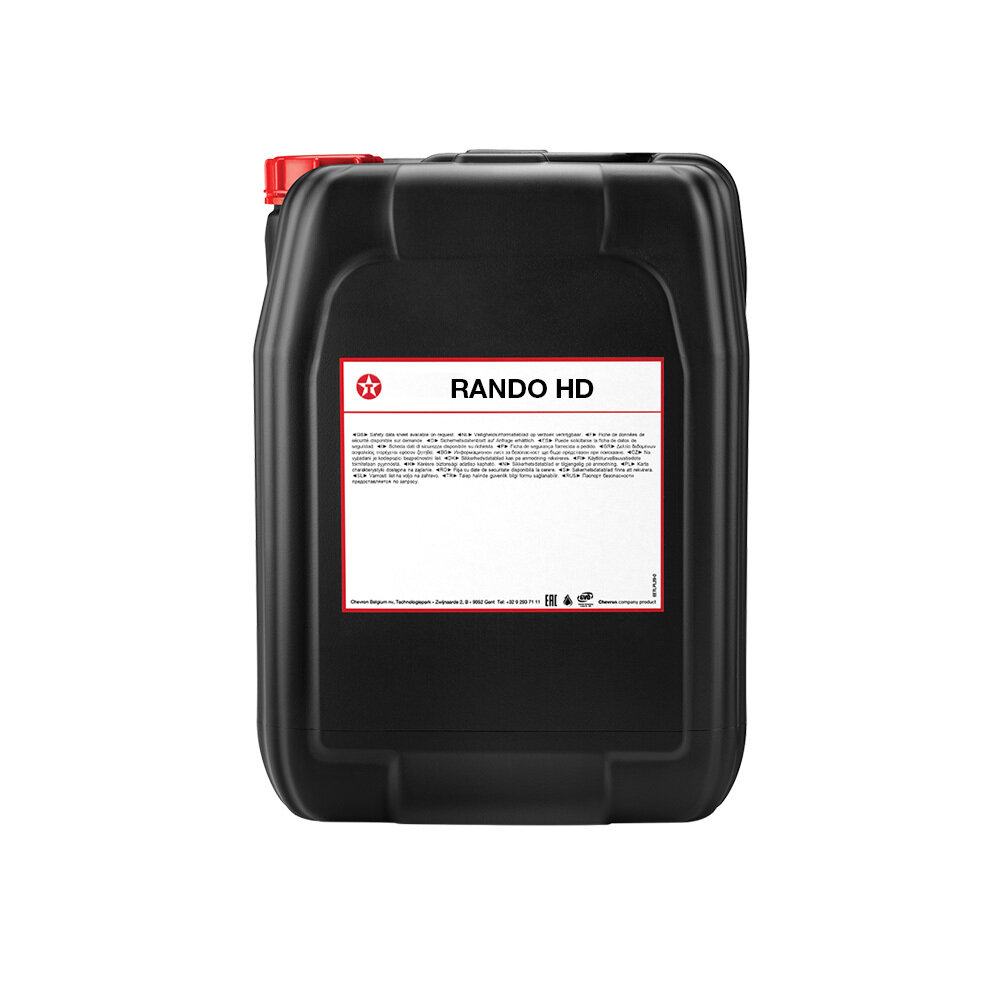
Rando HD – hydraulic oils
Hydraulics are at the heart of many production systems. In plastics equipment (e.g., injection moulding machines), selecting the right viscosity and specification supports reliable operation and easier maintenance. Neofyton provides selection guidance aligned with the equipment requirements.
Packaging tailored to your plant
In practice, supply continuity and the right packaging are just as important as the product itself. Neofyton helps align packaging and delivery frequency with consumption and the maintenance plan.
Lubricants guide for plastics injection moulding
All injection moulding machines require regular lubrication — and as equipment evolves, so do the requirements for suitable oils and greases. Typically, plants use hydraulic oils, slideway/guide oils and greases, while certain machines also require gearbox oils according to the OEM specification.
What matters most in selection
The goal is maximum equipment protection and stable process performance. An unsuitable product choice or improper lubricant handling can slow production and negatively affect operational efficiency, especially in high-capacity environments.
Hydraulic oil maintenance
Hydraulic oil condition changes during operation due to contamination (particles, water, air) and thermal/oxidative effects. That’s why regular checks and oil analysis are recommended — to identify risks to pumps, seals and valves in time.
Oil cleanliness & contamination control
OEMs often require a minimum cleanliness level (e.g., ISO 4406 class 18/15/12 or better). Oil that is not clean enough can lead to accelerated wear and failures of hydraulic components. Proper filtration at filling and correct storage practices are therefore recommended.
Practical on-site recommendations
Before use, hydraulic oil should be filtered and degassed (air release) where applicable. Using “drum oil” without cleanliness control is not recommended. Regular oil analysis and adherence to change intervals help reduce the risk of unplanned downtime.
Solutions and support in practice
How lubricants are selected for stable production
In industrial practice, the difference is most often made by operating conditions, the required cleanliness level and the maintenance plan. Neofyton helps standardise lubricant selection and application — to reduce contamination risk and unplanned downtime.
Specification & viscosity
Alignment with OEM requirements, operating temperature and system load.
Cleanliness & filtration
Focus on ISO cleanliness codes, proper filling/filtration and storage practices to prevent contamination.
Monitoring in operation
Routine checks and oil analysis help detect changes early and protect critical components.